Dropshipping vs. Fulfillment: Which is Better for Startups?

Dropshipping vs. Fulfillment: Which is Better for Startups?
In the fast-paced world of ecommerce, startups face a critical decision early on: how to handle inventory and order fulfillment. Two dominant models—dropshipping and third-party fulfillment—offer distinct advantages and challenges. For entrepreneurs with limited resources, choosing the right approach can make or break their business. This article dives into the pros, cons, and statistics behind each model, while highlighting how tools like eprofitify can streamline operations for startups.
Understanding Dropshipping
How It Works
Dropshipping allows businesses to sell products without holding inventory. When a customer places an order, the seller purchases the item from a third-party supplier, who then ships it directly to the customer. Platforms like Shopify, Oberlo, and AliExpress have popularized this model by simplifying supplier integration.
Pros for Startups
- Low Startup Costs: No need to invest in inventory upfront.
- Scalability: Easily test new products without financial risk.
- Flexibility: Operate from anywhere with minimal overhead.
Cons
- Thin Profit Margins: Intense competition often leads to price wars.
- Limited Control: Shipping times and product quality depend on suppliers.
- Customer Service Challenges: Handling returns or defective items becomes complex.
Statistics
- The global dropshipping market was valued at $128.6 billion in 2020 and is projected to grow at a CAGR of 24.39% through 2028 (Grand View Research).
- 33% of online retailers use dropshipping as a primary fulfillment method (Digital Commerce 360).
Understanding Third-Party Fulfillment
How It Works
Startups partner with fulfillment centers (e.g., Amazon FBA, ShipBob) to store inventory and handle packing, shipping, and returns. Businesses send bulk inventory to these warehouses and pay fees per order or storage space used.
Pros for Startups
- Faster Shipping: Warehouses often offer 2-day delivery, boosting customer satisfaction.
- Brand Control: Custom packaging and quality checks are possible.
- Higher Margins: Bulk purchasing reduces per-unit costs.
Cons
- Upfront Costs: Inventory purchases and storage fees strain cash flow.
- Complex Logistics: Managing stock levels requires precision.
- Risk of Overstocking: Unsold inventory becomes a liability.
Statistics
- 23% of global online sales are fulfilled by third-party logistics (3PL) providers (Statista).
- 54% of Amazon sellers use Fulfillment by Amazon (FBA) for storage and shipping (Jungle Scout).
Comparative Analysis: Key Factors for Startups
-
Cost Structure
- Dropshipping: Ideal for bootstrapped startups, with average initial costs under $500.
- Fulfillment: Requires $2,000–$10,000+ for inventory and setup, but offers better long-term margins.
-
Scalability
- Dropshipping scales effortlessly but struggles with consistency as order volume grows.
- Fulfillment centers handle high volumes efficiently but require upfront inventory investments.
-
Profit Margins
- Dropshipping margins hover around 10–30%, while fulfillment models can achieve 30–60% through bulk pricing.
-
Risk
- Dropshipping minimizes financial risk but exposes brands to supplier errors.
- Fulfillment risks include unsold inventory but provides greater operational control.
Technology’s Role: How eprofitify Bridges the Gap
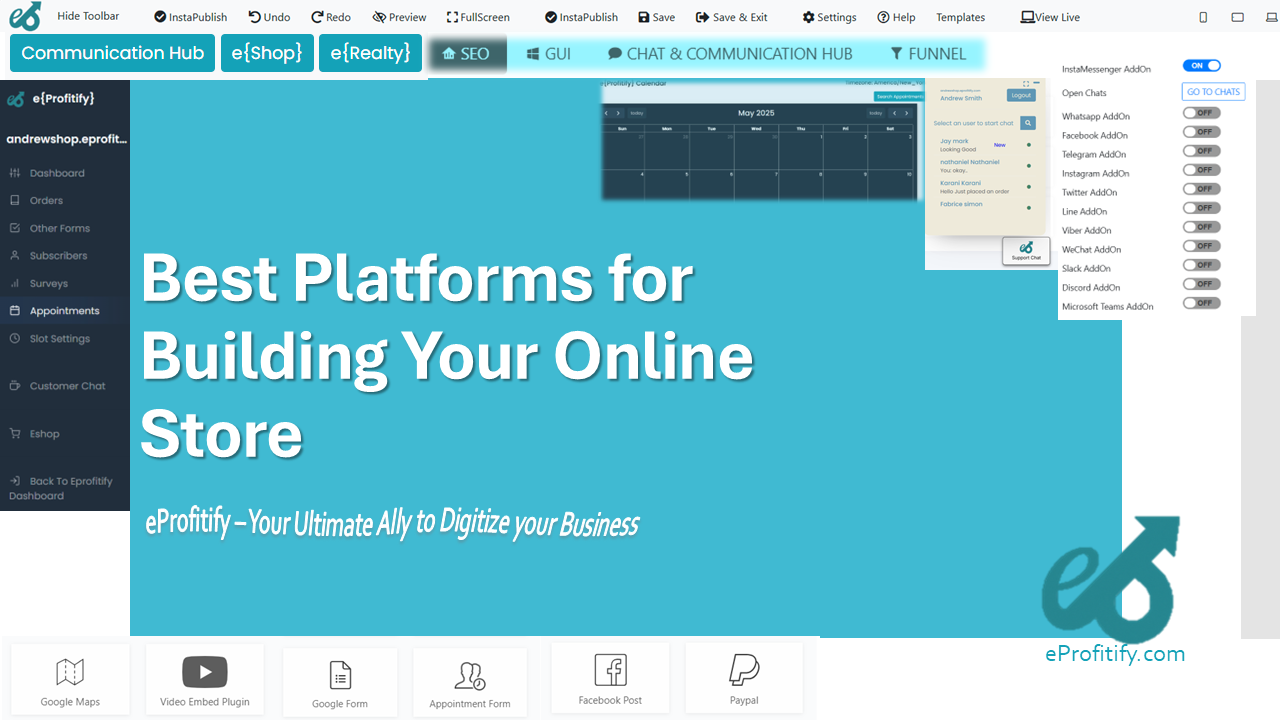
For startups navigating these models, eprofitify emerges as a game-changing all-in-one platform. Its suite of tools addresses pain points in both dropshipping and fulfillment:
- Ecommerce Integration: Sync with suppliers (dropshipping) or 3PLs (fulfillment) for real-time inventory tracking.
- CRM: Manage customer relationships and retention campaigns, crucial for offsetting thin margins in dropshipping.
- Instant Messaging: Resolve customer queries swiftly, reducing cart abandonment.
- Appointment Management: Coordinate with suppliers or logistics partners seamlessly.
- Analytics Dashboard: Monitor sales trends to optimize stock levels in fulfillment models.
By automating tasks like order processing and customer support, eprofitify lets startups focus on growth regardless of their fulfillment strategy.
Conclusion
For startups prioritizing flexibility and low risk, dropshipping is a logical starting point. However, businesses aiming for brand control and higher margins may prefer third-party fulfillment. Whichever path they choose, leveraging tools like eprofitify is essential. Its robust features—from CRM to instant messaging—empower startups to streamline operations, reduce overhead, and scale sustainably. In ecommerce’s competitive landscape, the right model combined with smart technology can turn a fledgling idea into a thriving enterprise.

.png)