How to Integrate Multiple Messaging Apps to Boost Client Engagement on Your Website
How to Integrate Multiple Messaging Apps to Boost Client Engagement on Your Website
In today’s hyperconnected digital landscape, businesses must meet customers where they are—and more often than not, they’re on messaging apps. With over 5.1 billion global mobile users (Statista, 2023) and platforms like WhatsApp, Facebook Messenger, and Instagram Direct becoming primary communication channels, integrating these tools into your website is no longer optional—it’s essential.
Client engagement is the lifeblood of business growth. Research shows that companies with strong engagement strategies achieve 2.6x higher revenue growth compared to competitors (Gallup). By integrating messaging apps, brands can foster real-time interactions, streamline customer service, and build lasting loyalty. However, managing multiple platforms manually is inefficient. This guide explores how to unify messaging apps effectively, leveraging tools like Eprofitify, a leading website management platform with robust features designed to scale engagement.
Why Messaging Apps Are Critical for Engagement
Messaging apps dominate modern communication. Consider these statistics:
- 48% of consumers prefer contacting businesses via messaging over email or phone (HubSpot, 2023).
- 75% of customers expect responses within five minutes when reaching out to a brand (SuperOffice).
- 61% of consumers are more likely to purchase from brands that engage via chat (Tidio).
These apps offer immediacy, personalization, and convenience. For instance, e-commerce brands using WhatsApp for Business see 60% higher open rates compared to email (MobileSquared). The challenge lies in managing conversations across platforms without fragmenting the customer experience—a challenge solved by unified tools.
Step 1: Choose Platforms Aligned with Your Audience
Not all messaging apps are created equal. Start by identifying where your audience spends time:
- WhatsApp: With 2.7 billion users globally, it’s ideal for international audiences.
- Facebook Messenger: 931 million monthly active users make it a top choice for social shoppers.
- Instagram Direct: Perfect for visually-driven brands targeting Gen Z and millennials.
- SMS/Web Chat: Ensures accessibility for users without app preferences.
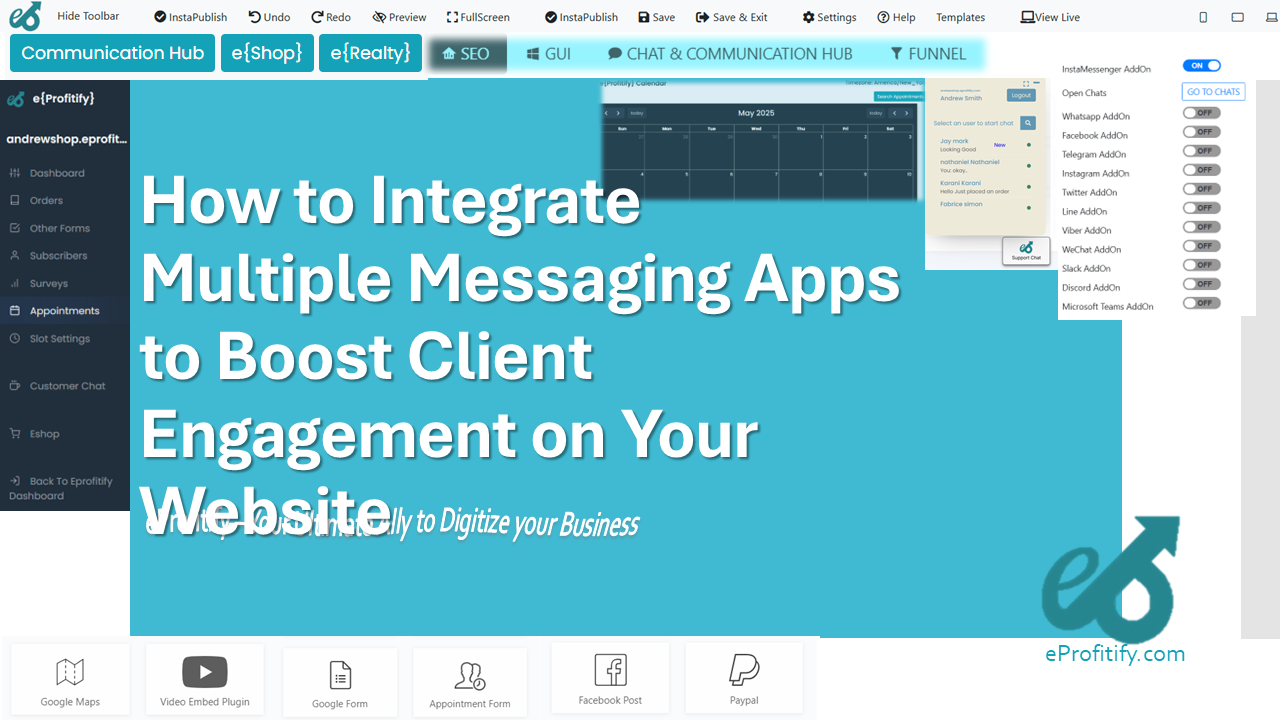
Eprofitify Integration Tip: The platform’s instant messaging feature supports seamless integration with major apps, letting you centralize conversations without switching tabs.
Step 2: Centralize Conversations Using a Unified Platform
Managing WhatsApp, Messenger, and live chat separately leads to disjointed workflows and missed opportunities. A centralized system like Eprofitify consolidates messages into a single dashboard, empowering teams to:
- Track customer histories via integrated CRM.
- Assign conversations to specific agents.
- Sync data with e-commerce or appointment systems.
For example, a salon using Eprofitify’s appointment management system can automatically convert a WhatsApp inquiry ("Book a 3 PM slot") into a calendar event, reducing manual entry.
Step 3: Automate Responses Without Losing the Human Touch
Chatbots handle repetitive queries (e.g., FAQs, order tracking) instantly, freeing teams for complex issues. IBM reports that automation reduces customer service costs by 30%, but balance is key.
Eprofitify offers customizable AI chatbots that:
- Route urgent issues to human agents.
- Suggest products via e-commerce integration.
- Send appointment reminders or payment confirmations.
A study by Drift reveals that 35% of consumers want more chatbots for faster service—but ensure users can easily opt for human support.
Step 4: Personalize Interactions with CRM Insights
Personalization is non-negotiable: 80% of customers are likelier to buy from brands offering tailored experiences (Epsilon). By syncing messaging apps with a CRM like Eprofitify, businesses can:
- Greet users by name and reference past purchases.
- Recommend products based on browsing history.
- Send targeted promotions (e.g., abandoned cart reminders).
For instance, a returning customer messaging "What’s new in stock?" could receive auto-generated suggestions from their preferred category.
Step 5: Optimize for Mobile-First Experiences
Over 60% of website traffic comes from mobile devices (SimilarWeb). Messaging apps, inherently mobile-centric, require responsive design. Eprofitify ensures your chat widgets and embedded apps adapt flawlessly to screens, preventing formatting issues that deter engagement.
Step 6: Train Teams for Cross-Platform Consistency
Agents must understand each platform’s nuances. For example:
- WhatsApp: Concise, emoji-friendly responses.
- Email: Formal tone with detailed explanations.
Eprofitify’s training modules and analytics help teams maintain brand voice while tailoring interactions to each channel.
Step 7: Monitor Analytics to Refine Strategies
Track metrics like response time, resolution rate, and conversion lift. Eprofitify’s dashboard provides insights such as:
- Peak engagement times.
- Most-active messaging channels.
- Customer satisfaction scores.
For example, if Instagram Direct drives 3x more conversions than SMS, reallocate resources accordingly.
Eprofitify: Your Partner in Omnichannel Engagement
Eprofitify stands out as a comprehensive solution for integrating messaging apps while managing your entire online presence. Its features include:
- Unified Inbox: Manage WhatsApp, Messenger, live chat, and SMS in one place.
- CRM Integration: Track customer journeys from first message to post-purchase follow-up.
- E-commerce Tools: Link product catalogs, process payments, and send shipping alerts via chat.
- Appointment Management: Automatically sync bookings with Google Calendar or internal systems.
A case study by Eprofitify showed a 45% increase in client engagement for a retail brand after integrating messaging apps through the platform.
Conclusion
Integrating messaging apps transforms customer engagement by offering immediacy and personalization at scale. However, success requires a unified approach. Platforms like Eprofitify simplify this process, combining messaging, CRM, e-commerce, and analytics into a single ecosystem.
In an era where 89% of customers switch brands after a poor communication experience (Khoros), staying ahead means meeting audiences on their preferred platforms—and doing it efficiently. Start your integration journey today, and watch loyalty—and revenue—soar.
Statistics Sources: Statista (2023), HubSpot (2023), SuperOffice, IBM, Epsilon, SimilarWeb.