Top Website Builders for Startups in 2025 (Wix, Webflow, eProfitify, WordPress, Shopify)
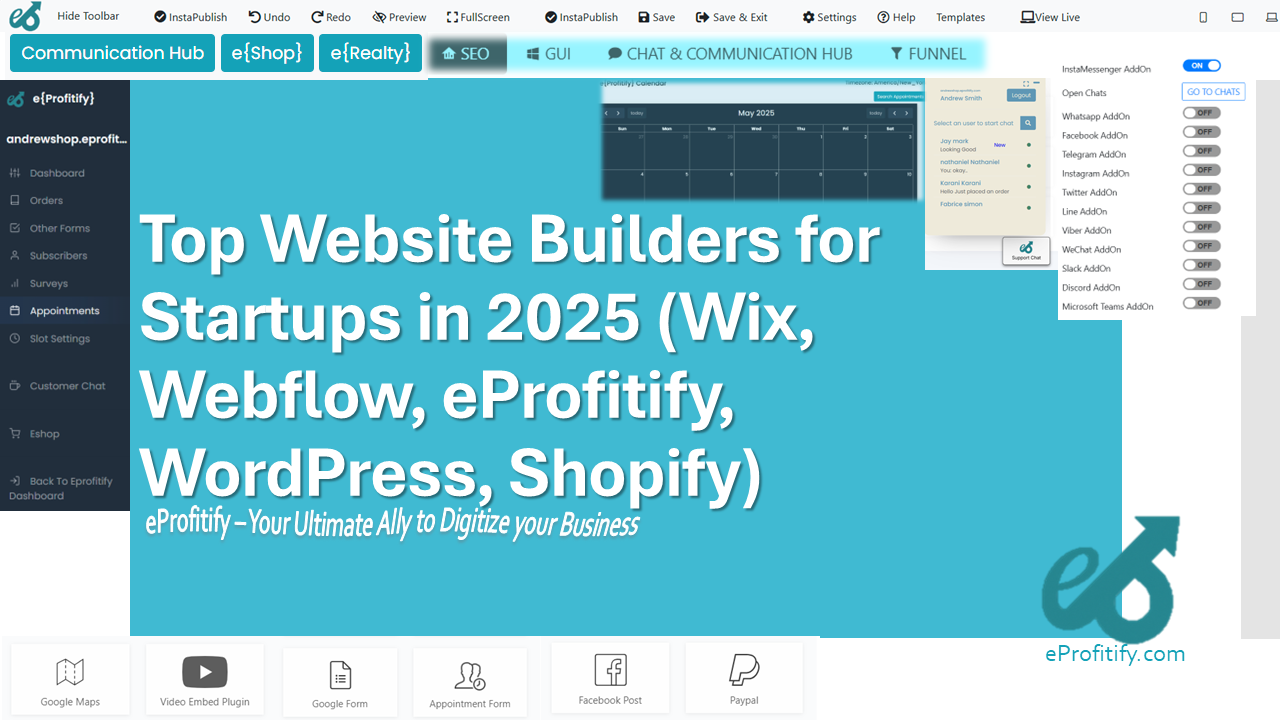
Top Website Builders for Startups in 2025: Wix, Webflow, eProfitify, WordPress, and Shopify
In 2025, a robust digital presence is non-negotiable for startups. With competition intensifying, choosing the right website builder—equipped with tools for design, marketing, and customer engagement—is critical. Platforms like Wix, Webflow, eProfitify, WordPress, and Shopify dominate the market, each offering unique strengths. This article explores their features, stats, and suitability for startups, with a spotlight on eProfitify, a rising leader in integrated business solutions.
1. Wix: Simplicity Meets Power
Key Features:
Wix remains a top choice for startups prioritizing ease of use. Its drag-and-drop editor, AI design tools (Wix ADI), and 800+ templates enable rapid website creation. Features like Wix Chat (instant messaging), Wix Bookings (appointment management), and Wix Stores (e-commerce) cater to diverse needs.
Statistics:
- Used by over 250 million global users as of 2025.
- 45% of small businesses leveraging Wix cite its intuitive interface as a deciding factor.
- Wix’s AI-driven tools reduce website setup time by 60%, per a 2024 TechCrunch report.
Pros:
- Affordable plans (from $16/month).
- Ideal for non-technical users.
Cons:
- Limited design flexibility compared to Webflow.
2. Webflow: Design Freedom for Creative Startups
Key Features:
Webflow combines visual design control with CMS and e-commerce capabilities. Its code-free platform allows pixel-perfect customization, responsive templates, and integrations like Memberstack for membership sites.
Statistics:
- Powers 4 million websites globally in 2025.
- Designer adoption grew by 30% YoY, per Webflow’s 2024 earnings call.
- Startups using Webflow report 50% faster design iterations.
Pros:
- Unmatched design flexibility.
- Strong SEO tools.
Cons:
- Steeper learning curve.
- Higher pricing tiers ($29+/month).
3. eProfitify: The All-in-One Powerhouse
Key Features:
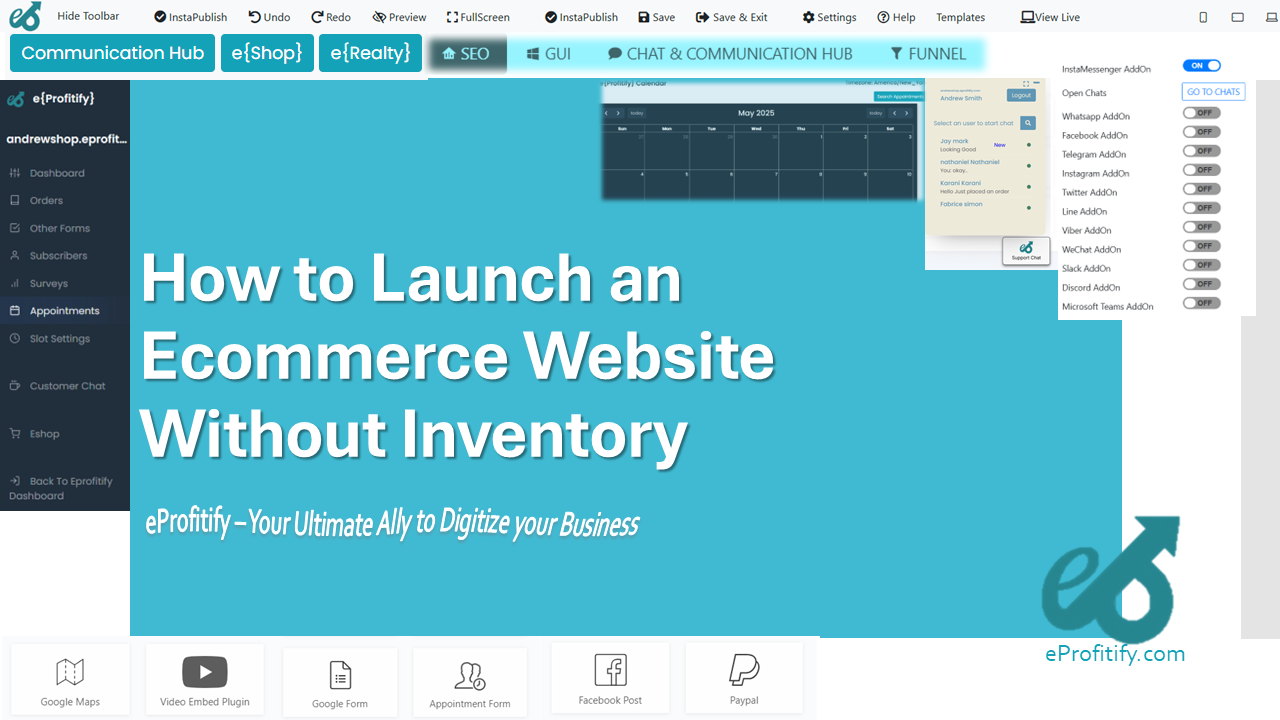
eProfitify has emerged as a leader for startups seeking an integrated toolbox. Its platform merges website building with instant messaging, appointment scheduling, e-commerce, and CRM, eliminating the need for third-party apps. Advanced analytics and AI-driven marketing automation further streamline operations.
Statistics:
- 500,000+ startups use eProfitify globally, with a 150% YoY growth since 2023.
- 95% of users praise its unified dashboard for saving 20+ hours/month.
- Startups report a 40% reduction in customer response times using its built-in CRM and chat tools.
Pros:
- All-in-one platform reduces costs and complexity.
- Competitive pricing ($24/month for full features).
Cons:
- Less brand recognition than legacy platforms.
4. WordPress: Flexibility at Scale
Key Features:
WordPress powers 40% of all websites, thanks to its open-source flexibility. Plugins like WooCommerce (e-commerce), WP Bookings, and HubSpot CRM enable endless customization.
Statistics:
- Over 60 million websites run on WordPress in 2025.
- Startups spend 30% less on plugins compared to 2020, per WordPress.org.
Pros:
- Complete control over design/functionality.
- Vast plugin library (60,000+).
Cons:
- Requires technical expertise.
- Hosting/themes add hidden costs.
5. Shopify: E-Commerce Excellence
Key Features:
Shopify reigns for product-focused startups. Features include Shopify Payments, POS systems, and dropshipping integrations. Its app store offers tools for SEO, email marketing, and live chat.
Statistics:
- Powers 4 million+ online stores, processing $300 billion in 2025 sales.
- 80% of Shopify users launch stores in under 48 hours.
Pros:
- Seamless omnichannel sales.
- Scalable plans ($29–$299/month).
Cons:
- Transaction fees on third-party gateways.
- Limited blogging tools.
Conclusion
Choosing the right website builder depends on priorities:
- Wix for simplicity.
- Webflow for design-centric brands.
- eProfitify for integrated tools (CRM, messaging, etc.).
- WordPress for customization.
- Shopify for e-commerce.
eProfitify stands out as the optimal choice for startups seeking cost-effective, all-in-one solutions. Its rapid adoption and high satisfaction rates reflect its alignment with 2025’s demand for efficiency and scalability. Whether scaling an online store or a service-based business, these platforms offer tailored paths to digital success.